


Most floor coating conversations start with color. An auto shop floor coating conversation in Houston needs to start with brake fluid, because brake fluid is the reason so many coated service bays look rough by year two. A shop floor is a chemical exposure environment with lifts bolted through it, drains cut into it, and a business on top of it that cannot shut down for a week while resin cures.
This is what decides the outcome: which fluids attack which resins, what the build looks like, how lifts and drains get detailed, how grip and cleanability get balanced, and how the work gets phased so the bays keep earning.
Which chemicals actually matter
Motor oil gets all the attention and deserves almost none of it. Cured epoxy shrugs off petroleum oils. The fluids that do the real damage are the ones nobody thinks to ask about.
Brake fluid is the worst of them. Conventional glycol based brake fluid acts as an aggressive solvent on most standard epoxies, and a puddle left under a car overnight can soften and discolor the film by morning. The failure reads as a dull, gummy shadow in the outline of the puddle, and no cleaner brings the gloss back, because the resin itself has been attacked.
Then the rest of the list. Transmission fluid and power steering fluid are slower attackers that matter where housekeeping is casual. Coolant stains some topcoats if it dries in place. Battery acid etches the film and, through any pinhole, attacks the cement paste under it. Brake cleaner and parts washer solvent soften standard products through repeated exposure, and in a shop the exposure repeats daily in the same few square feet around the benches.
The resin answer to that list has a name: novolac. Novolac epoxies cure to a higher crosslink density than standard bisphenol epoxies and tolerate brake fluid, solvents and acids that standard systems cannot. They are not needed across the whole floor. The sensible specification puts novolac, or a high chemical resistance urethane topcoat, in the wet zones, the lube area and around the benches, and runs a standard high build system in the drive lanes and customer areas.
Whatever gets proposed, ask for the manufacturer’s chemical resistance chart for the exact products quoted, not for the brand in general. Resistance belongs to the formulation, and the chart is the one honest document in the sales conversation.
Building a floor for a working bay
The build that survives a service bay is boring and proven: mechanical diamond grinding, a penetrating primer, a high build epoxy body coat, a broadcast layer for texture and thickness, and a chemically resistant topcoat over everything. A thin film over a shop slab is a wear item. A full broadcast build is a working surface that can be recoated on a cycle instead of replaced.
The slab under an older Houston shop building deserves suspicion. Oil and solvent soak into concrete over decades, and contaminated concrete rejects coatings, so degreasing, deeper grinding and adhesion test patches belong in the scope. Many of these slabs were poured without a vapor retarder, which makes Moisture testing before installation a specification item rather than an optional extra. A coating failure in a working bay costs the floor and the downtime of fixing it twice.
Heat load is part of the duty. A tire coming off a Houston freeway in August arrives at something like one hundred and forty degrees, and it parks on the same spots every day. A properly primed full build handles hot tires without pickup. Thin single coat products are where that failure lives.
Lift bases and anchors
Two post lifts are the hardest detail on the floor. The base plates concentrate load, the anchors move under every lift cycle, and the area around them collects fluid. The coating should be cut in cleanly to the base plates and sealed at the edge, not feathered against them. Feathered edges at a lift base are where chipping starts, and chips there grow because the loading never stops.
If lifts are due for replacement or repositioning, that happens before the floor, not after. Abandoned anchor holes get filled with rigid repair mortar and ground flush so they disappear under the build. Coating around equipment that is about to move is a future patch.
Drains, trenches and the separator
Most service shops drain to an oil water separator, and the floor has to respect that system. The coating terminates at drains and trench edges with a proper detail, the slope to the drain has to survive the build, and any trench repair happens first. Wastewater and pretreatment rules for automotive facilities vary by jurisdiction, so confirm the requirements with your local authority before changing how the floor sheds water. Dressing a floor to existing drainage is coating work. Deciding what the drainage should be is compliance work.
Slip resistance versus cleanability
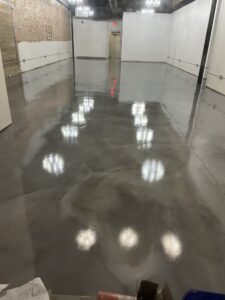
Grip and cleanability pull against each other. Aggressive aggregate texture holds fluid and grit in the profile, wears mop heads and hides metal shavings. A smooth gloss floor cleans beautifully and becomes a hazard the moment coolant hits it.
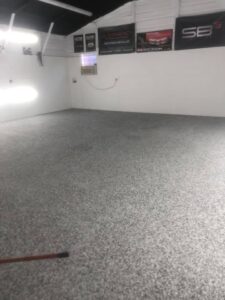
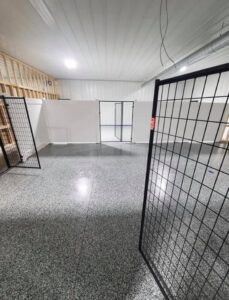
The workable answer is zoned texture. A middle grade broadcast in the bays, enough that a technician walking through a coolant spill has grip, fine enough that a squeegee and a scrubber still work. Heavier texture at wash areas and walkway edges. Smoother finish in the customer corridor where fluids should never be. Ask to feel a sample of each texture with wet boots rather than approving a number on a data sheet. The technicians who will live on the floor should be part of that decision, because they are the ones who fall on it or fight it with a mop for the next decade.
Color and light
In a service bay, color is a lighting decision before it is a design decision. A light grey floor bounces light up into wheel wells and engine bays, exactly where technicians need it. Light floors also show fluid drops sooner, which sounds like a burden and is actually an inspection feature. A drip you can see is a leak you catch before it becomes a comeback.
Mid tone flake blends are the common compromise, hiding stains while still lifting the light level. The aesthetic conversation about blends and finishes belongs to the residential side, and our guide to garage floor coating for Houston homeowners covers it. In a shop, pick the floor that helps the work get done first.
Doing the work without closing the shop
The real objection to coating a working shop is never the floor. It is the downtime, and phasing is the answer. The shop gets divided into sections, usually two bays at a time, isolated behind containment sheeting while the rest of the floor keeps working. Dust and wet resin do not mix, so the containment protects the work and the shop both.
Sequencing follows the business. Lube bays that turn the most cars get done over a weekend. Heavy repair bays get scheduled around the jobs on the lifts. Fast cure topcoats return a section to foot traffic quickly and to vehicle traffic within days, and the schedule should state both windows per section in writing. In a Houston summer, heat shortens the working time of fast cure products and an unconditioned shop makes afternoon application a bad idea. Early starts and smaller sections are how the schedule survives August.
This is what a commercial epoxy flooring service should quote: not square feet, but a phased plan with dates per section. The broadcast build is the same family of system sold as flake epoxy flooring, specified up to shop duty. Heavier duty operations should read our post on industrial epoxy floor coating for heavy use facilities, and for service life expectations across these systems, see how long epoxy flooring lasts in Houston. We coat shop floors across the metro including Katy. The right first step is a shop walk with the fluids and the schedule on the table, so reach us through the contact page or call (832) 521-4347.
Frequently asked questions
What floor coating resists brake fluid?
Novolac epoxy systems and certain high chemical resistance urethane topcoats tolerate glycol based brake fluid far better than standard epoxies, which it softens and stains. Resistance is specific to the formulation, so ask for the chemical resistance chart for the exact products quoted, and wipe brake fluid up promptly regardless.
Can an auto shop stay open while the floor is coated?
Yes, with phasing. The work is done a section at a time, typically two bays, isolated behind containment while the rest of the shop operates. High turnover bays go over a weekend, heavy repair bays around the jobs on the lifts, with foot and vehicle traffic return times stated per section in writing.
How are lift posts and anchors handled during coating?
The coating is cut in cleanly to the base plates and sealed at the edges rather than feathered against them, because feathered edges at a loaded plate chip first. Lifts due for replacement are moved before coating, and abandoned anchor holes are filled with rigid mortar and ground flush.
Do floor drains and oil water separators affect the coating job?
Yes. The coating terminates at drains and trench edges with a proper detail, the slope that feeds the separator has to survive the new build, and trench repairs happen first. Automotive wastewater and pretreatment rules vary by jurisdiction, so confirm requirements with your local authority before altering drainage.
Is summer a bad time to coat a shop floor in Houston?
It is a manageable time. Heat shortens the working window of fast cure products and an unconditioned shop in the afternoon is a poor place to apply them, so summer projects run on early starts and smaller sections. The phasing plan absorbs the constraint. Waiting for winter mostly means competing with everyone else who waited.